Brooklyn
Taxi DriverBrooklyn appears as a reachable borough in Travis Bickle’s movement through the city, first as the destination for a meeting with Andy and later as part of a bridge-and-street route during Travis’s armed crisis. The contrast gives the location two sharply different functions: a place for an uneasy social transaction and a landscape that seems to carry him toward death before returning him to Manhattan.
A Destination in Travis’s City Life
Travis goes to Brooklyn to meet a fellow driver and Andy. He has saved several thousand dollars, carried in a belt around his waist, and is taking aspirin by the handful, chewing three or four tablets at a time. His companions arrive in a taxi that is not taking fares; Andy, dressed in a dark pinstriped suit, white shirt, floral tie, and fashionable long hair, is introduced as a traveling salesman.
The three take the other driver’s cab to a shabby but not wholly disreputable hotel. When Andy says they will part from their companion there, Travis gives the man thirty dollars from his own pocket. The exchange makes the Brooklyn trip a small but concrete social encounter: Travis spends money to acknowledge a companion, while the onward destination and the purpose of Andy’s hotel visit remain unspecified.
The Bridge and the Approach
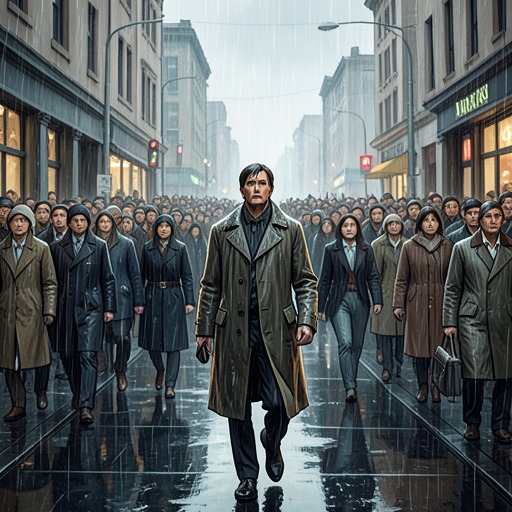
Later, Travis travels toward Brooklyn beneath a great stone arch that recalls a church from home. The passage is described through fragments of rigging and the image of being caught like a fly in a web; below him, the brown sunlight on the water becomes part of a journey he imagines as carrying him toward death. The bridge is not identified by name, so Brooklyn is located through the crossing and the direction of travel rather than a named structure.
As he reaches Brooklyn, the buildings appear to him like yellow teeth jutting from the river’s bite. He passes the Squibb Buildings and Watchtower, then moves along the ramp and onto Atlantic Avenue in the heat, jostled among pedestrians and met by car horns. The concrete sequence gives the borough a vivid, hostile profile, but it remains filtered through Travis’s unsettled perception rather than offered as a neutral description of the place.
Return Crossing and Narrative Function
After the crowd calls for his arrest, Travis pushes through and emerges on the other side. His taxi scrapes the curb as pedestrians scatter; he then crosses the bridge again, over the subway and between its iron girders. The route leads to Canal Street in Manhattan, which seems to him like another country, before he drives north and along the West Side Highway toward home.
The repeated crossing makes Brooklyn part of a spatial hinge in the narrative. The outward passage accompanies Travis’s sense of entering a reality shaped by hatred and death; the return is a hurried escape from the crowd. Once he is back on the Manhattan route, the noise in his head has quieted. Brooklyn’s significance therefore lies less in an account of its civic life than in the way its streets and crossings organize a movement from approach, to crisis, to retreat.